
Expanding your business across borders is exciting, but one wrong move in your international SEO strategy can cost you thousands of potential customers. I've watched companies pour money into translation and localization, only to see their international traffic tank because of simple technical mistakes they could have avoided.
Here's the thing: international SEO goes way beyond just translating your content into different languages. It's about getting the technical setup right, understanding different cultures, and thinking strategically about each market. I'm going to walk you through the biggest mistakes I've seen over the years and show you how to sidestep them completely.
Choosing the Wrong URL Structure
Your URL structure is the foundation of your international SEO strategy, yet it's one of the first places where things go wrong.
Too many businesses pick a structure without thinking about what happens down the road. You've got three main options (ccTLDs, subdirectories, or subdomains), and each one has its pros and cons.
Country code top-level domains (ccTLDs) like example.fr or example.de send the strongest signals to search engines about which country you're targeting. But they're not cheap to maintain, and you're basically starting from zero with domain authority in each new market.
Subdirectories (example.com/fr/ or example.com/de/) are usually the smartest choice for most businesses. You keep all your domain authority in one place, and they're way easier to manage. That's why you see most companies going this route.
Subdomains (fr.example.com) sit in the middle, but they often don't perform as well as subdirectories because Google might treat them like separate websites.
Here's where companies really shoot themselves in the foot: switching URL structures after they've already launched. I've seen businesses lose half their organic traffic during these migrations because they didn't plan it right from day one.
Ignoring Hreflang Implementation
Hreflang tags tell search engines which language and regional version of a page to show users. Mess this up, and you'll end up sending Spanish speakers to your Italian site or showing British content to people in Australia.
The biggest problem? Either implementing hreflang wrong or skipping it entirely. When that happens, search engines get confused about which version to show, you end up with duplicate content problems, and your users have a terrible experience.
Here's a breakdown of proper hreflang implementation:
| Element | Correct Approach | Common Mistake |
|---|---|---|
| Language Code | Use ISO 639-1 format (en, es, fr) | Using incorrect codes or full language names |
| Region Code | Add ISO 3166-1 Alpha 2 when needed (en-US, en-GB) | Forgetting regional variations |
| Self-Reference | Every page must reference itself | Only linking to alternate versions |
| Reciprocal Links | All variations must link to each other | One-way hreflang tags |
| X-Default | Include for unmatched languages | Omitting the fallback option |
Don't forget to update your hreflang tags when you add or remove international versions. This isn't a set-it-and-forget-it thing. You need to audit it regularly, especially after making changes to your site.
Using Automatic Translation Without Review
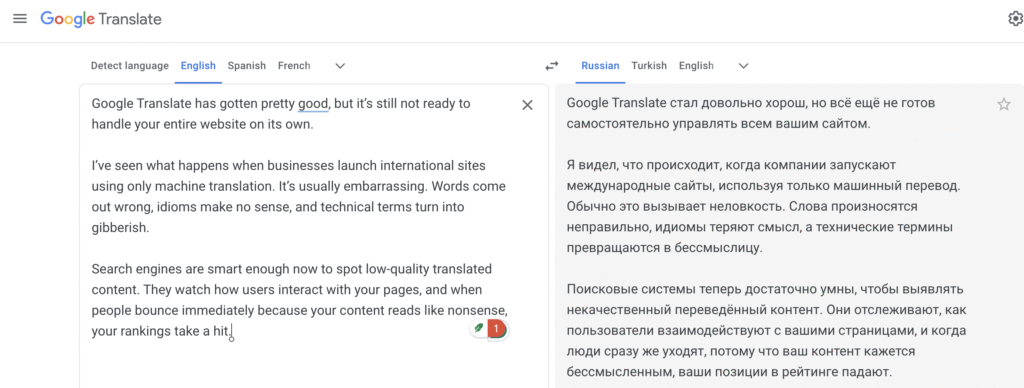
Google Translate has gotten pretty good, but it's still not ready to handle your entire website on its own.
I've seen what happens when businesses launch international sites using only machine translation. It's usually embarrassing. Words come out wrong, idioms make no sense, and technical terms turn into gibberish.
Search engines are smart enough now to spot low-quality translated content. They watch how users interact with your pages, and when people bounce immediately because your content reads like nonsense, your rankings take a hit.
Here's the smart approach: use translation tools to get you started, but always have native speakers review and polish the content. They'll catch the cultural stuff, understand what people in that market are actually searching for, and fix terminology that automated tools completely miss.
Neglecting Local Keyword Research
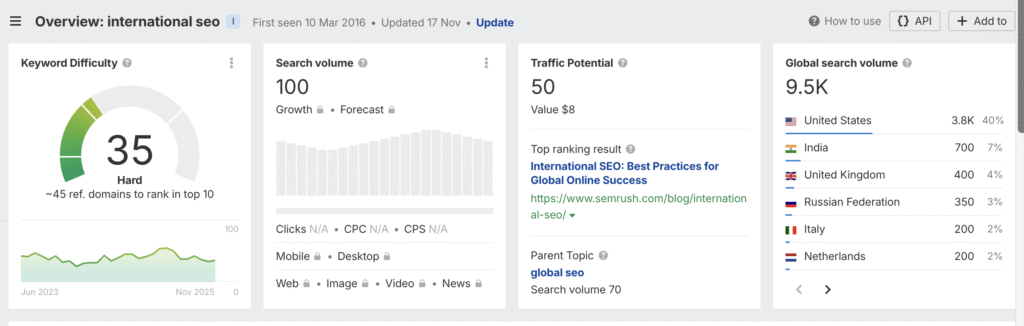
This might be the most expensive mistake on the list. Thinking you can just translate your keywords directly and call it a day is like assuming British English and American English are the same thing.
People search differently across countries, even when they speak the same language. What someone in the UK calls a "mobile phone" is a "cell phone" in the US. "Trainers" in Britain become "sneakers" in America. You get the idea.
But it goes deeper than vocabulary. Search intent changes by market. Someone searching "best coffee maker" in Germany wants different information than someone making the same search in Japan or Brazil.
You need to:
- Do fresh keyword research for each market using tools and data from that specific region
- Look at what your local competitors are ranking for to understand what actually works in each area
- Work with people who actually live in those markets and understand how locals search. They'll spot opportunities you'd never find just by translating keywords.
Duplicating Content Across Markets
Setting up separate URLs for different countries but filling them all with the same English content is wasteful and creates technical SEO problems.
Search engines might flag this as duplicate content, which hurts your rankings everywhere. Worse, you're giving users in those markets absolutely nothing of value.
If you're not ready to create proper localized content for a market, hold off on launching a separate version. Better to wait until you can do it right than rush out duplicate pages.
When you do create content for multiple markets, make real changes. Update the examples, case studies, pricing, measurements, and cultural references. Show both search engines and users that each version has a specific purpose.
Forgetting About Local Link Building
Your backlink profile needs to match your international presence. Having all your links come from US websites while trying to rank in Japan just doesn't work.
Links from local sites tell search engines you're actually relevant in those specific markets. Plus, they bring you traffic from the right audiences.
Build real relationships with publishers, bloggers, and industry sites in each market. Sponsor events there, write for their publications, and get involved in their online communities.
This takes time, and you'll probably need to work with local partners who know the market. But the SEO results and business growth make it worth the effort.
Overlooking Technical Infrastructure
Page speed matters everywhere, but where you host your site affects different markets in different ways. If your server's in New York and you're trying to reach customers in Australia, those users are going to see slow load times.
Think about using a Content Delivery Network (CDN) so you're serving content from servers closer to your international users. This speeds things up and improves the experience across all markets.
Mobile optimization isn't optional anywhere, but how people use mobile varies by country. Some markets see more than 80% of traffic coming from mobile devices. Your site has to work perfectly on phones and tablets.
Ignoring Local Search Engines
Google runs most markets, but not every market. In Russia, Yandex has serious market share. In China, you need Baidu. In South Korea, Naver matters.
Each search engine has its own algorithm, ranking factors, and technical requirements. If you only optimize for Google, you're missing opportunities in these markets.
Find out which search engines matter in your target markets and learn what they need. Sometimes that means building separate strategies or even separate versions of your site.
Conclusion
International SEO mistakes can cost you big, but they're all preventable if you plan ahead and execute carefully. The key is treating each market as its own thing instead of assuming what works in one country will work everywhere.
Start with solid technical foundations, invest in real localization, and build your strategy around genuine insights from each market. Remember, international SEO takes time. It's not something you can rush.
Ready to expand your global reach without falling into these common traps? Our team specializes in creating international SEO strategies that actually work. Get in touch today, and let's discuss how we can help you succeed in new markets while avoiding these expensive mistakes.